Affiliate marketing and influencer marketing have both become staples in the world of online promotions. Each one offers its own way of reaching audiences and generating revenue, but the details of how they work, the kind of partnerships they form, and their expectations couldn’t be more different. If you’re weighing which strategy to try, or just want to understand how they play out, this article covers the key differences, along with what to consider when getting started.
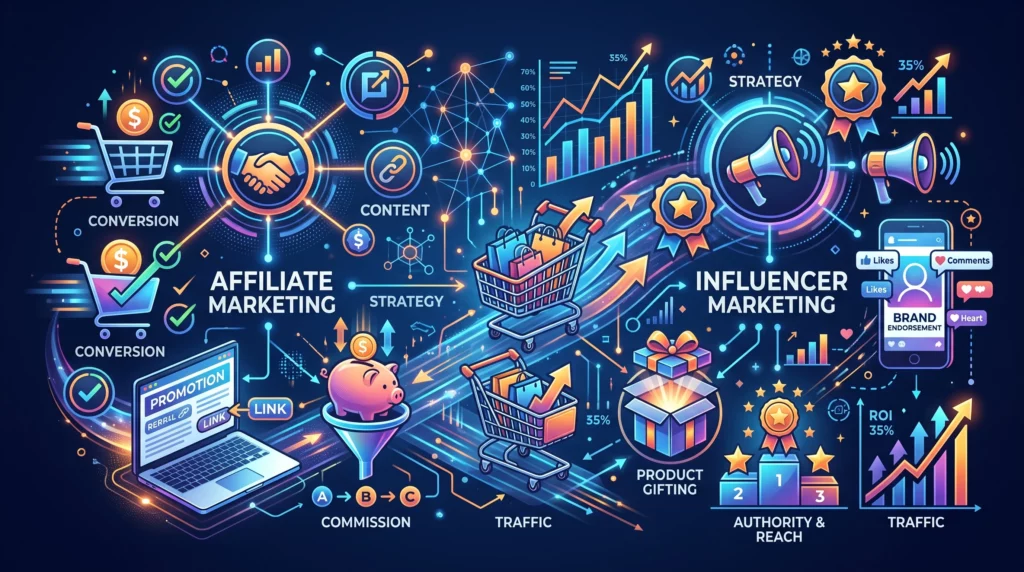
Affiliate Marketing vs Influencer Marketing: What Do They Mean?
Understanding what makes affiliate marketing and influencer marketing different helps you pick the right fit for your goals. Both make use of social or online audiences, but they rely on different tactics and relationships.
Affiliate marketing works by having individuals (affiliates) promote products or services and earn a commission for successful sales, leads, or clicks they drive. Affiliates share special tracking links, and they get paid when someone completes an action after clicking those links. In most cases, it’s a performance-based approach: the more sales an affiliate generates, the more they earn.
Influencer marketing is a bit more about image and connection. Brands work with influencers, who use their personal reputation and following to promote products or services on their platforms like Instagram, YouTube, or TikTok. Influencers often produce unique content, such as reviews, tutorials, or lifestyle posts, that showcases a brand in a way that feels genuine or relevant to their audience.
How Affiliate Marketing Works
Affiliate marketing is really structured and process driven. Anyone with a website, blog, or social media presence can sign up for an affiliate program. No need to be famous or have a huge following. The main steps in affiliate marketing usually look something like this:
- Sign Up for Affiliate Programs: Join affiliate networks or direct programs from brands. Examples include Amazon Associates, ShareASale, and Rakuten.
- Share Tracking Links: Affiliates get custom links that track sales, leads, or clicks back to them. These links can be used in blog articles, emails, social media, or even videos.
- Earn Commissions: Payout is only triggered when the desired action (like a sale) occurs. Commissions can vary widely, depending on the product or service.
Affiliate marketing is popular among bloggers, review sites, coupon sites, and niche communities. The focus is usually on content that stays helpful over time (like product reviews or “best of” guides), so affiliates can keep earning long after the original post goes live. For those new to this model, maintaining accurate tracking links and updating old content with fresh information can really give your revenue a boost.
How Influencer Marketing Works
Influencer marketing is much more direct in terms of audience engagement. Influencers are typically personalities who’ve grown a dedicated audience around interests like fashion, fitness, beauty, travel, or gaming. A typical influencer marketing campaign might involve:
- Identifying Relevant Influencers: Brands look for influencers whose followers match their target audience.
- Negotiating Partnerships: Brands and influencers work out the details—what kind of posts will be made, how many, and when. Payment is usually upfront or based on the content, not per sale.
- Publishing Sponsored Content: Influencers post promotional content on their platforms, often blending product mentions into authentic stories or experiences.
The power of influencer marketing is built on personal trust and the way influencers communicate value through storytelling. Many followers see influencer recommendations as more relatable or authentic than traditional ads. For brands, teaming up with microinfluencers (creators with smaller, yet more engaged audiences) can sometimes generate better results than just going after mega influencers with large followings.
Key Differences Between Affiliate Marketing and Influencer Marketing
- Payment Structure: Affiliate marketing is typically performance based, while influencer marketing is more often a flat fee or paid per campaign, regardless of how many sales are made.
- Partnership Length: Affiliate partnerships are usually ongoing, with affiliates getting paid as long as their links generate results. Influencer collaborations are often short term, like a single campaign or series of posts.
- Content Style: Affiliates focus on value driven content, like in-depth reviews or comparisons. Influencers use their personality and style to organically integrate products into their feed.
- Audience Targeting: Affiliates may reach wider but less engaged audiences. Influencers engage deeply with their followers, who often trust their opinions more.
- Goal: Affiliates prioritize conversions (getting sales or sign ups). Influencer marketing aims for broader brand awareness, social proof, or product buzz.
When comparing these strategies, it’s important to think about whether your marketing focus is on tracking sales or growing your brand’s recognition over time. Some companies even pair both approaches to maximize results, letting different types of content work together and reach multiple audience segments.
What to Consider Before Choosing a Strategy
Picking between affiliate marketing and influencer marketing depends on your situation, resources, and goals.
- Your Audience: If you have a niche blog or website, affiliate marketing could bring steady income over time. If you have a strong personal brand and actively get involved with fans, influencer marketing might suit you better.
- Your Channel: Affiliate marketing is great for those who love writing reviews, making tutorials, or curating shopping guides. Influencer marketing requires strong camera presence, storytelling, or a unique look and feel on visual platforms.
- Revenue Expectations: Affiliates may see slow but steady commissions, while influencers might negotiate higher payments for individual gigs.
Another factor is the time you can commit. Maintaining affiliate links, monitoring analytics, and updating content takes ongoing effort, while influencer marketing can often hinge on your ability to craft compelling, real time content and collaborate with brands for seasonal or limited campaigns. Think about your workflow, creative strengths, and how you want to engage with your audience as you choose a strategy.
Common Challenges and How to Overcome Them
Affiliate Marketing Challenges
- Standing Out: Lots of competition means you need quality content or a unique angle.
- Tracking Issues: Sometimes sales aren’t tracked properly, leading to missed commissions. Sticking to trustworthy networks helps minimize problems.
- Payment Delays: Some affiliate programs have long payment windows, so patience is key, especially when you’re starting out.
To handle these challenges, create high value content and regularly check that your links are working. Building strong relationships with reputable affiliate networks can give your efforts some added security and help smooth the way for consistent payments.
Influencer Marketing Challenges
- Maintaining Authenticity: Followers are quick to spot sponsored content that feels forced. Picking brands that match your values keeps trust high.
- Constant Content Creation: Influencers need to keep producing fresh, creative posts to hold attention and attract new deals.
- Results Hard to Track: Measuring return on investment (ROI) is not always direct, since success isn’t only about sales but can also include engagement, reach, or brand mentions.
Influencers can give their impact a boost by setting clear goals with brands before a campaign starts, asking for honest feedback from their audience after sponsored content, and using analytics tools to monitor engagement, clicks, and conversion rates.
Advanced Tips for Success
I’ve found that both affiliate and influencer marketing work best when you focus on genuine value and long-term relationships, whether with a brand or your audience. Here are a few tips that really help level up your approach:
Check Analytics Regularly: Dig into reports from affiliate dashboards or social platform insights to see what’s resonating. Use what you find to tweak your strategies, discovering which topics or styles drive the most interest and conversions.
Optimize Your Content: For affiliates, keep old posts updated with fresh links or new recommendations. For influencers, create stories or reels that highlight behind the scenes moments or real life experiences with products. Mixing up content formats helps keep your audience interested.
Keep Communication Open: Brands appreciate affiliates or influencers who provide feedback, share results, and suggest ways to improve campaigns. Regular check-ins can spark new opportunities and help grow more impactful partnerships over time.
Stay Educated: Online marketing trends move quickly. Consider joining industry forums or taking short courses on copywriting, SEO, video editing, or storytelling to expand your skill set and keep your approach fresh and relevant.
Examples of Each Approach in Action
- Affiliate Example: A tech blogger who writes detailed laptop reviews and includes affiliate links from brands like Dell or Lenovo. Site visitors read the review, click the link, and if they make a purchase, the blogger earns a commission.
- Influencer Example: A beauty influencer creates an Instagram story demoing a new makeup palette, sharing honest thoughts, and tagging the brand. Followers might get a discount code, but the influencer is paid for their reach and engagement, not necessarily product sales.
Other examples can include travel bloggers who recommend hotels with affiliate links, or fitness creators who team up with supplement brands for sponsored workout videos. Each path offers a range of ways to work with brands and connect with audiences.
Frequently Asked Questions
Question: Can one person do both affiliate and influencer marketing?
Answer: Definitely. Many creators blend affiliate links with sponsored content, depending on the campaign, their audience, and their platforms.
Question: Which strategy works faster?
Answer: Influencer marketing can deliver quick exposure through a single post, while affiliate marketing tends to build gradually.
Question: Do you need a big audience for either?
Answer: A large audience helps, especially for influencers, but niche audiences can be just as valuable if they’re engaged and trust your opinion.
Wrapping Up
Affiliate marketing and influencer marketing both open up creative ways to earn online, but they suit different work styles and goals. Whether you’re looking for passive income or an interactive career online, getting a good grasp of each model can point you toward the path that matches your strengths and interests. Choosing the right fit might take some experimentation, but it’s worth it for the potential rewards each model offers.
Dig in, experiment with both, and see where your skills shine best. Online marketing moves fast, so don’t be afraid to try new things and adapt as the digital world keeps evolving. By staying flexible and focusing on real value, you’ll make the most of whatever strategy you choose and stand out in the ever changing world of online promotions.
-
How To Evaluate Affiliate Programs Before Joining
-

Video Tutorials To Boost Your Affiliate Sales
-

Best Tools Every Eyebrow Enthusiast Should Own
-

Use Social Media To Showcase Beauty Products
Join a thriving community
Stay in the loop with everything you need to know
And build your own online presence!